
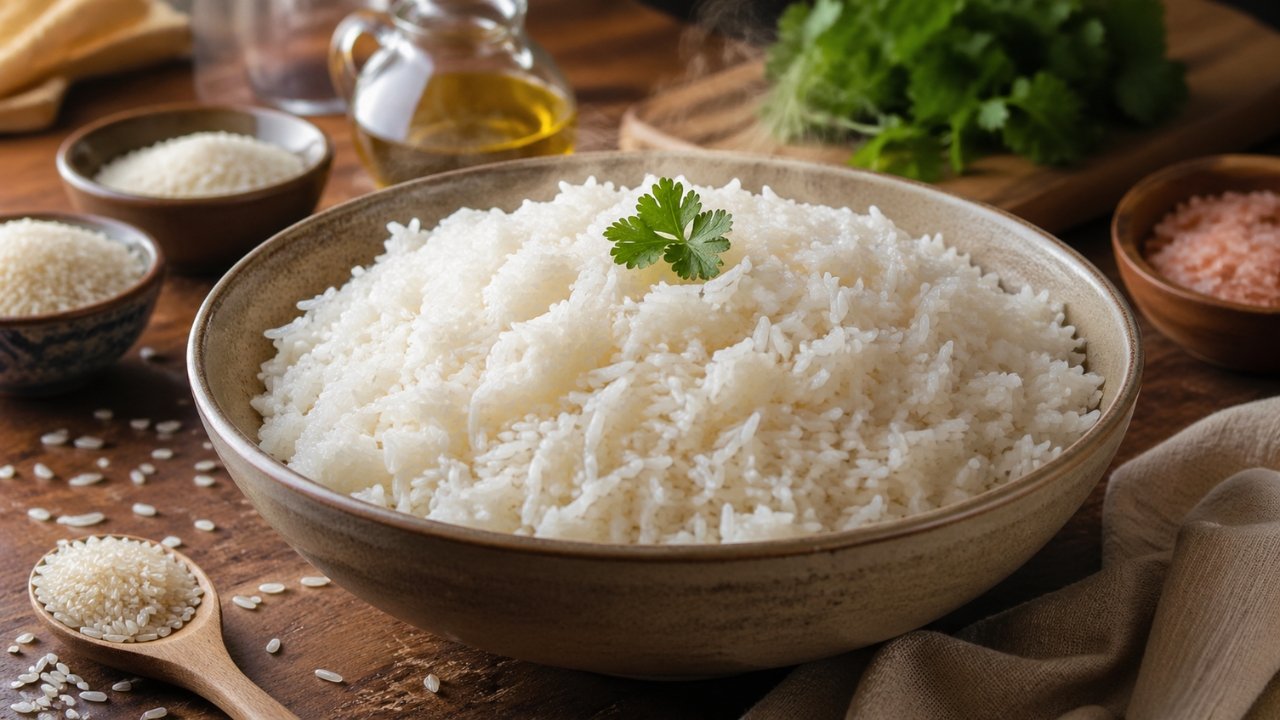
There is a quiet discipline behind a perfect bowl of rice. It should not arrive as a heavy mound or a sticky clump, but as a soft, fragrant bed of individual grains, each one tender at the center and lightly separate at the edge. This method for steamed rice is built around precision: the right grain, the right rinse, the right pot, and most importantly, the exact water ratio.
For long-grain white rice, I rely on a simple chef’s ratio: 1 cup rice to 1 1/4 cups water. It gives the grains enough moisture to cook through without drowning them. The result is elegant, fluffy rice in just 18 minutes of cooking, with no guesswork and no unpleasant starchiness.

This is the kind of foundation recipe that makes a meal feel composed. Serve it beneath saucy curries, beside roasted fish, with stir-fried vegetables, or simply with butter and salt. Once mastered, perfect steamed rice becomes less of a side dish and more of a quiet luxury.

Recipe Information
- Recipe Name: Steamed Rice
- Description: Perfectly tender, separate long-grain steamed rice using a precise water ratio for fluffy results in 18 minutes.
- Servings: 4 servings
- Preparation Time: 5 minutes
- Cooking Time: 18 minutes
- Resting Time: 10 minutes
- Total Time: 23 minutes
- Difficulty: Easy
- Recipe Category: Side Dish
- Cuisine: Global
Ingredients
For the steamed rice
- 1 cup long-grain white rice, such as basmati or jasmine
- 1 1/4 cups cold water
- 1/2 teaspoon fine sea salt
- 1 teaspoon neutral oil or unsalted butter, optional
Optional finishing touches
- 1 teaspoon butter for a richer finish
- 1 tablespoon finely chopped parsley, cilantro, or chives
- A few drops of fresh lemon juice for brightness
Kitchen Tools
- Fine-mesh sieve
- Medium heavy-bottomed saucepan with a tight-fitting lid
- Measuring cup
- Fork or rice paddle
- Clean kitchen towel, optional
Preparation
Rinsing the rice
- Start with the grain: Place the rice in a fine-mesh sieve and rinse it under cold running water. Move the grains gently with your fingers until the water runs mostly clear. This removes excess surface starch, which is the main reason rice turns gummy or sticky.
- Drain thoroughly: Let the rinsed rice sit in the sieve for 2 minutes. This small pause matters because excess rinse water can quietly disturb the precise cooking ratio.
Cooking with the exact ratio
- Transfer the drained rice to a medium saucepan. Add 1 1/4 cups cold water, the salt, and the oil or butter if using. This ratio is designed for long-grain white rice and produces separate, tender grains without dryness.
- Set the pan over medium-high heat and bring the water just to a gentle boil. As soon as you see steady bubbling around the edges, stir once, then immediately reduce the heat to the lowest setting.
- Important: Cover the pan with a tight-fitting lid and do not lift it during cooking. Steam is the real cook here; once it escapes, the temperature and moisture balance change.
- Cook for exactly 18 minutes on very low heat. The water should be absorbed, and the rice should be tender but still distinct. If your stove runs hot, use the smallest burner to prevent scorching.
Resting and fluffing
- Turn off the heat and leave the covered pot undisturbed for 10 minutes. This resting time is not included in the total time, but it is essential for even texture. The grains finish settling in their own steam.
- Texture check: Remove the lid and gently fluff the rice with a fork or rice paddle. Lift from the edges toward the center rather than pressing downward. The grains should separate easily and feel light, not wet.
- If desired, fold in a small knob of butter or a few herbs just before serving. Keep the touch gentle so the structure of the rice remains intact.
Serving Suggestions
Serve steamed rice warm, immediately after fluffing, when the grains are at their most fragrant and delicate. Spoon it into a shallow serving bowl rather than packing it tightly; the looseness of the presentation echoes the texture you worked to create.
It is beautiful alongside grilled chicken with pan juices, coconut-based curries, miso-glazed salmon, sautéed mushrooms, lentils, braised greens, or any dish with a glossy sauce that needs something clean and tender beneath it. For a simple table, finish the rice with butter, herbs, and a little sea salt.
Chef Tips
Choose the right rice
Long-grain varieties are ideal for separate grains. Basmati will be drier, longer, and more aromatic, while jasmine will be slightly softer and floral. Short-grain rice needs a different ratio and will naturally cook stickier.
Do not skip rinsing
Rinsing is not decorative; it is technical. It removes loose starch from the surface of the grain, helping the rice steam cleanly rather than bind together.
Keep the lid closed
The most common mistake is curiosity. Once the lid is on, leave it alone. A sealed pot creates the gentle steam environment that makes steamed rice tender without becoming wet.

Respect the rest
Resting allows moisture to redistribute. If you fluff too soon, the bottom grains may be wetter than the top. Ten quiet minutes make the texture more even and refined.
Storage and Make-Ahead Tips
Cool leftover rice quickly, then transfer it to an airtight container and refrigerate for up to 3 days. For best food safety and texture, do not leave cooked rice sitting at room temperature for long periods.
To reheat, sprinkle the rice with 1 to 2 teaspoons of water per cup, cover, and warm gently on the stovetop or in the microwave. The added moisture revives the steam without making the grains soggy. Rice may also be frozen in flat portions for up to 1 month, then reheated directly from frozen.
Additional Information
Rice is one of the world’s most essential foods, yet its preparation is deeply personal. Across kitchens and cultures, the method changes with the grain, the pot, the climate, and the meal it accompanies. What remains constant is the desire for balance: enough water to soften the grain, enough restraint to preserve its shape.
This recipe is intentionally simple because simplicity is where technique becomes visible. The 1 to 1 1/4 ratio for long-grain white rice is not excessive, and that is precisely why it works. It allows the rice to steam rather than boil heavily, producing grains that are tender, separate, and quietly fragrant.
Once you understand this method, a pot of rice stops feeling uncertain. It becomes reliable, elegant, and calm: the kind of everyday cooking detail that brings grace to the entire table.
