
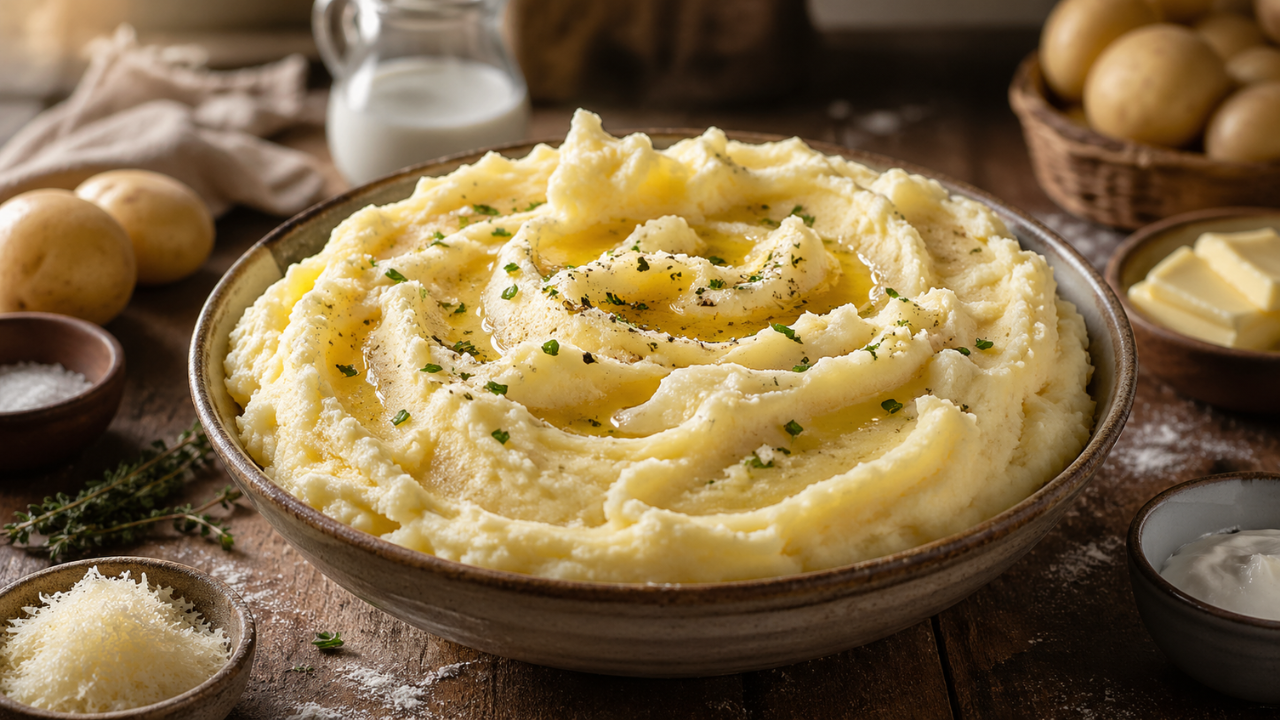
There are mashed potatoes that simply sit beside a roast, and then there are mashed potatoes that make the table pause for a moment. This version belongs firmly to the second kind. It is soft, cloudlike, gently buttery, and finished with one simple ingredient that changes everything: crème Stirred in at the end, it gives the potatoes a subtle tang, a satin finish, and a lighter lift than cream alone can offer.
The beauty of this recipe is that it does not ask for ceremony. In just 20 minutes, humble potatoes become something refined enough for a holiday table yet easy enough for a weeknight supper. The crème fraîche melts into the warm mash, loosening the texture without making it thin, adding richness without heaviness, and bringing a quiet elegance that tastes deeply chef-led.

Serve these potatoes with roast chicken, seared salmon, braised beef, mushroom ragout, or simply a spoonful of pan juices. They are generous, polished, and comforting in the most graceful way.

Recipe Details
Recipe Name: Silky Crème Fraîche Mashed Potatoes
Description: Light, luxurious mashed potatoes enriched with crème fraîche for a silky texture, delicate tang, and refined finish.
Servings: 4 servings
Preparation Time: 5 minutes
Cooking Time: 15 minutes
Total Time: 20 minutes
Difficulty: Easy
Recipe Category: Side Dish

Cuisine: French-inspired comfort cooking
Ingredients
For the Potatoes
- 900 g floury potatoes, such as Yukon Gold, Maris Piper, or Russet, peeled and cut into even chunks
- 1 1/2 teaspoons fine sea salt, plus more for the cooking water
- 60 g unsalted butter, cut into small cubes
- 90 ml whole milk, warmed
- 90 g crème fraîche, at room temperature
- Freshly ground white pepper or black pepper, to taste
For Finishing
- 1 tablespoon melted butter, optional
- 1 tablespoon finely chopped chives or parsley
- A small pinch of flaky sea salt
Kitchen Tools
- Medium saucepan
- Colander
- Potato ricer, food mill, or sturdy masher
- Small saucepan for warming milk
- Wooden spoon or silicone spatula
- Serving bowl
Preparation
Cook the Potatoes Properly
- Start in cold water: Place the potatoes in a saucepan and cover them with cold water by about 2 cm. Add a generous pinch of salt. Starting potatoes in cold water helps them cook evenly from edge to center, which is essential for a smooth mash.
- Bring to a steady boil, then reduce slightly and cook for 12 to 15 minutes, or until the potatoes are tender enough to break easily when pressed with a fork. Avoid a violent boil, which can waterlog the edges before the centers are fully cooked.
Dry and Mash
- Drain the potatoes thoroughly in a colander, then return them to the hot pan for 1 minute over very low heat. Shake the pan gently to let excess steam escape. This small step gives the finished mashed potatoes a cleaner, fluffier texture.
- Pass the potatoes through a ricer or food mill into the warm pan. If using a masher, press gently and patiently rather than beating. Overworking potatoes can make them gluey, so the goal is to break them down with care, not force.
Add Butter, Milk, and the One Simple Ingredient
- Butter first: Add the cubed butter while the potatoes are still hot. Fold gently until the butter melts into the mash. Fat coats the starches beautifully at this stage and helps create a smoother final texture.
- Pour in the warm milk gradually, folding as you go. You may not need every drop, depending on the potatoes. The mixture should look soft and creamy, but still hold a gentle shape on the spoon.
- The luxury ingredient: Fold in the crème fraîche at the end. This is what gives the potatoes their silkier, lighter character. Because crème fraîche is cultured and slightly tangy, it balances the butter and makes the mash taste elegant rather than heavy.
Season and Finish
- Season with fine sea salt and a little pepper. Taste carefully; potatoes need confident seasoning, but the crème fraîche also brings brightness, so add salt gradually.
- Spoon into a warm serving bowl. Swirl the surface with the back of a spoon, drizzle with melted butter if desired, and finish with herbs and a few flakes of sea salt.
Serving Suggestions
Serve these potatoes immediately, while they are warm, glossy, and softly spoonable. They are particularly beautiful under roasted chicken with lemony pan juices, slow-braised short ribs, grilled sausages, or a deep mushroom bourguignon. For seafood, pair them with seared scallops or salmon, where the crème fraîche echoes the elegance of a classic French sauce.
For presentation, use a shallow bowl rather than a deep dish. A wide surface lets you create soft waves in the mash, which catch butter, herbs, or sauce beautifully. These are not stiff, rustic potatoes; they should look relaxed, creamy, and quietly luxurious.
Chef-Style Tips
Choose the Right Potato
Floury potatoes give the best texture because they break down easily and absorb butter and dairy well. Yukon Golds offer a naturally buttery flavor and golden color, while Russets make a lighter, fluffier mash. Avoid waxy potatoes, which can turn dense or elastic when mashed.
Warm the Dairy
Cold milk tightens hot potatoes and can make the texture uneven. Warm milk slips into the mash more gracefully, keeping everything soft and cohesive. The crème fraîche should be at room temperature so it folds in smoothly without cooling the potatoes too quickly.
Do Not Overmix
Texture check: The potatoes should be creamy, not whipped into paste. Fold with a spatula or spoon, stopping as soon as the mixture looks unified. A few gentle movements are far better than vigorous stirring.
Storage and Make-Ahead Tips
These mashed potatoes are best freshly made, but leftovers can be stored in an airtight container in the refrigerator for up to 3 days. Reheat gently in a saucepan over low heat with a splash of milk, stirring slowly until warm and creamy again. Add a small spoonful of crème fraîche at the end to revive the texture.
To make them slightly ahead, prepare the mash up to 1 hour before serving and keep it covered in a heatproof bowl set over a pan of barely simmering water. Stir occasionally and loosen with a little warm milk just before serving.
Background and Culinary Context
Mashed potatoes have always belonged to the language of comfort, but the French have long understood how to make simple potatoes feel refined. Classic purées often rely on generous butter and careful technique, turning an everyday ingredient into something smooth, elegant, and almost sauce-like. This recipe borrows that sensibility while keeping the method approachable.
