
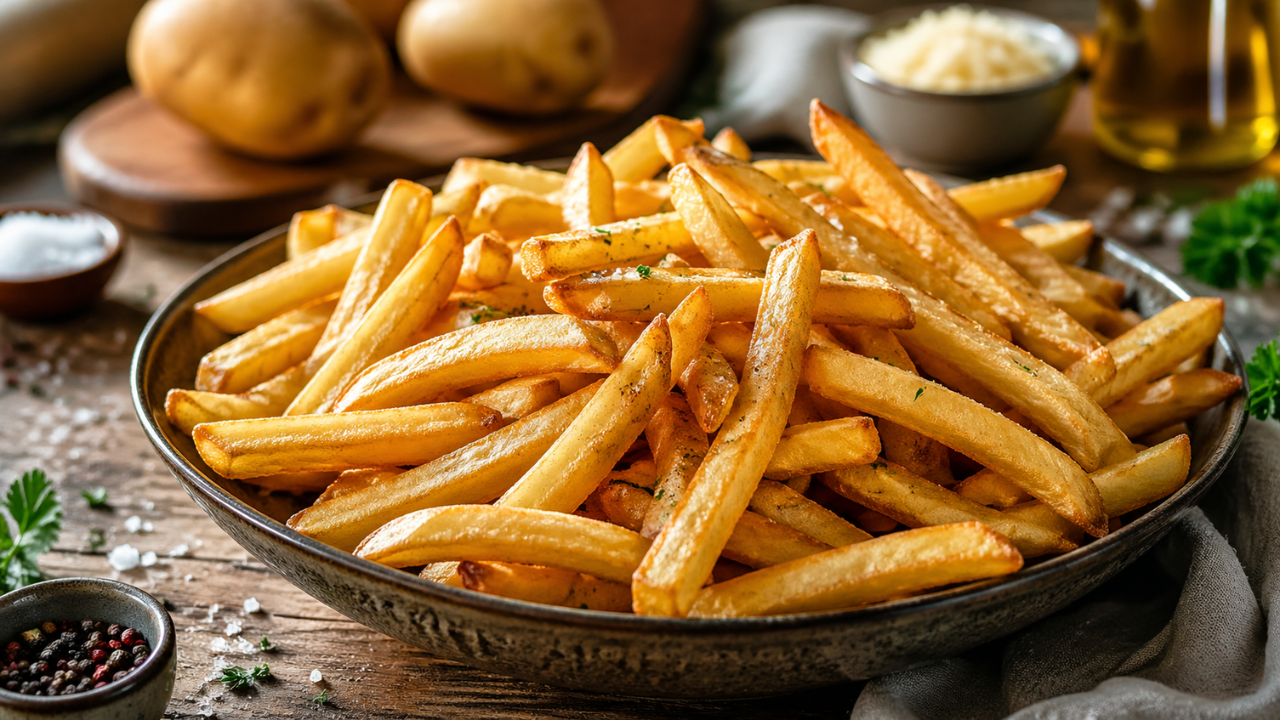
There is a particular pleasure in a plate of properly made French fries: the first delicate crackle as you bite through the golden shell, followed by the soft, steaming potato within. It is a simple dish, but not a careless one. The best fries are not merely fried potatoes; they are the result of choosing the right potato, rinsing away excess starch, controlling moisture, and respecting the heat of the oil.
The 2-step trick is beautifully straightforward: cook the potatoes once at a lower temperature to tenderize the interior, then fry them again at a higher temperature to create that crisp, amber shell. This method is used in professional kitchens because it gives control. The first fry builds the fluffy center; the second fry creates the color, texture, and irresistible finish.

These homemade French fries are ideal beside steak, roast chicken, burgers, mussels, or simply served on their own with a sharp mustard mayonnaise or a classic aioli. They feel generous, familiar, and a little luxurious when done properly, which is exactly why the method matters.
Recipe Information
- Recipe Name: Two-Step Golden French Fries
- Description: Hand-cut potatoes are soaked, dried, gently blanched in oil, then fried again until golden, crisp, and fluffy inside.
- Servings: 4 servings
- Preparation Time: 25 minutes
- Cooking Time: 22 minutes
- Resting Time: 30 minutes soaking time
- Total Time: 47 minutes
- Difficulty: Moderate
- Recipe Category: Side Dish
- Cuisine: French-inspired European
Ingredients
For the fries
- 1.2 kg floury potatoes, such as Russet, Maris Piper, or Agria
- 2 to 2.5 liters neutral frying oil, such as peanut, sunflower, or canola oil
- 2 teaspoons fine sea salt, plus more for finishing
- Cold water, for soaking
For serving
- Flaky sea salt, to finish
- Freshly ground black pepper, optional
- Mayonnaise, aioli, malt vinegar, or Dijon mustard, optional
- Finely chopped parsley, optional
Kitchen Tools
- Large heavy-bottomed pot or deep fryer
- Kitchen thermometer
- Sharp chef’s knife
- Large bowl
- Clean kitchen towels or paper towels
- Slotted spoon or spider strainer
- Wire rack set over a tray
- Large tray for holding the potatoes
Preparation
Preparing the potatoes
- Choose the right potato: Select floury potatoes rather than waxy ones. A floury potato has enough starch to become light and tender inside, while still forming a crisp exterior during frying. Peel the potatoes if you want a classic refined finish, or leave some skin on for a more rustic presentation.
- Cut the potatoes into even batons, about 1 cm thick. Consistency matters here. If some pieces are much thinner than others, they will darken before the thicker fries have finished cooking. A steady, even cut gives the fries a professional look and ensures they cook at the same pace.
- Place the cut potatoes in a large bowl of cold water. Swirl them gently with your hands, then drain and refill the bowl until the water looks much clearer. This removes surface starch, which helps the fries cook cleanly rather than sticking together or turning gummy.
- Let the potatoes soak in fresh cold water for 30 minutes. This is listed separately as resting time because it is inactive, but it makes a noticeable difference. Soaking relaxes the cut surface and helps the fries develop a cleaner, crisper shell later.
Drying and first fry
- Drain the potatoes thoroughly and spread them out on clean kitchen towels. Pat them completely dry. Moisture is the enemy of crisp frying; even a little excess water can make the oil spit and prevent the surface from sealing properly.
- Heat the oil in a deep, heavy pot to 150°C. Do not fill the pot more than halfway, as the oil will rise when the potatoes are added. A thermometer is the best way to stay accurate, and accuracy is the quiet secret behind excellent fries.
- First fry: Add the potatoes in batches and cook for 5 to 6 minutes, just until they are tender but still pale. They should not become golden at this stage. This first cook gently softens the potato interior, setting up the fluffy center that makes proper French fries so satisfying.
- Lift the fries from the oil with a spider strainer and transfer them to a wire rack. Allow them to rest for 10 minutes while you finish the remaining batches. They may look unremarkable at this point, but the structure has been built from within.
The second fry for the golden shell
- Increase the oil temperature to 185°C. This hotter second fry is where the magic happens. The surface rapidly crisps, the edges take on color, and the pale potato batons transform into golden, restaurant-style fries.
- Second fry: Return the potatoes to the hot oil in batches and fry for 3 to 4 minutes, or until deeply golden and crisp. Avoid crowding the pot, as too many fries will lower the oil temperature and make the result heavy rather than crisp.
- Texture check: The fries should sound lightly crisp when moved with the strainer, and the edges should look dry, blistered, and golden. This is the sign that the shell has formed properly.
- Transfer the fries to the wire rack, not directly onto a plate. A rack allows steam to escape, preserving the crispness. Season immediately with fine salt while the surface is still hot and receptive.
Finishing the fries
- Toss the fries gently with a final pinch of flaky sea salt. If desired, add a little black pepper or finely chopped parsley, but keep the seasoning restrained. The beauty of these fries is their clean potato flavor and precise texture.
- Serve at once. Freshly fried potatoes wait for no one; they are at their finest in the first few minutes, when the contrast between crisp shell and tender center is most pronounced.
Serving Suggestions
Serve these French fries in a warm bowl or on a wide platter lined with a clean napkin. They should arrive at the table visibly hot, lightly salted, and loose rather than piled too densely. A small bowl of aioli, mustard mayonnaise, or malt vinegar on the side gives guests a choice without overwhelming the potatoes.
For a bistro-style meal, serve them beside steak with a glossy pan sauce, roast chicken with herbs, or steamed mussels. For a more relaxed occasion, pair them with a well-made burger or grilled fish. The fries should feel crisp, generous, and freshly lifted from the fryer.
Chef Tips
Respect the oil temperature
The difference between excellent fries and ordinary ones often comes down to temperature. If the oil is too cool, the potatoes absorb oil and become limp. If it is too hot during the first fry, the outside colors before the inside becomes tender. The 150°C and 185°C stages each have a purpose.
Do not skip the drying
Dry potatoes fry better. After soaking, take the time to pat every batch thoroughly dry. This small detail creates a cleaner fry, a safer cooking process, and a more delicate crispness.

Season while hot
Salt clings best when the fries have just come out of the oil. Season in layers: a little fine salt immediately, then a delicate finish of flaky salt just before serving.
Storage and Make-Ahead Tips
Fries are best eaten immediately, but the first fry can be completed in advance. After the pale first fry, cool the potatoes on a rack, then refrigerate them uncovered for up to 6 hours. When ready to serve, fry them at 185°C until golden and crisp.
Leftover fries can be refrigerated for up to 2 days, though they will lose some of their elegance. Reheat them in a hot oven or air fryer until crisp again. Avoid microwaving, as it softens the shell and turns the texture heavy.
Additional Information
The double-fry method has long been associated with European fry traditions, especially in French and Belgian cooking, where potatoes are treated with the same care as any central ingredient. The technique is not complicated, but it is precise. First, the potato is cooked gently; then it is finished with heat and confidence.
That is the real lesson behind this recipe. A memorable fry is not about excess seasoning or elaborate garnish. It is about contrast: golden outside, fluffy within, salted at the right moment, and served without delay. Once you understand the 2-step trick, homemade fries become less of a gamble and more of a reliable kitchen pleasure.
