
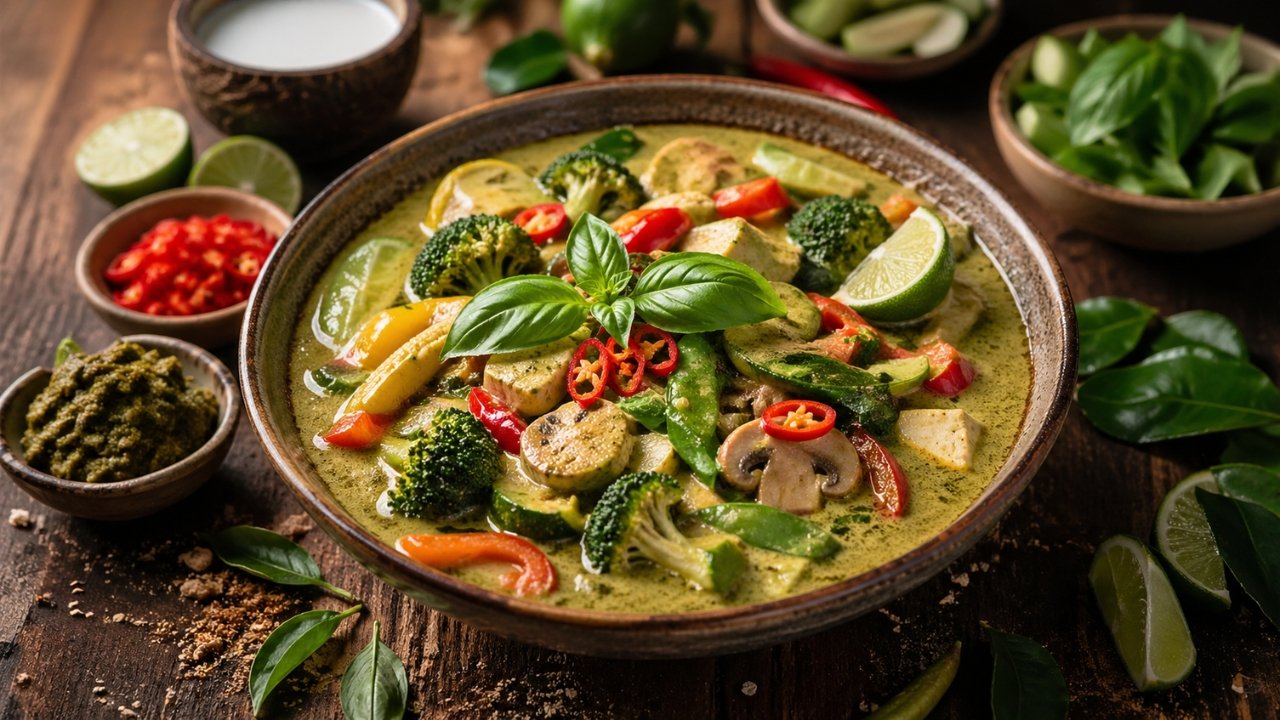
There is a particular kind of comfort in a bowl of Thai green curry: the warmth of coconut milk, the perfume of herbs, the soft bite of vegetables, and that gentle, fragrant heat that lingers without overwhelming the palate. This Veg Thai Green Curry is the sort of dish I turn to when dinner needs to feel generous, vivid, and deeply satisfying without asking for an entire evening at the stove.
The secret, as with so many good curries, is balance. Green curry paste brings lemongrass, galangal, green chilli, and kaffir lime leaf into the pan with immediate aroma, while coconut milk softens and carries those flavors into something silken. Vegetables add color and texture, tofu gives the bowl substance, and basil brings the unmistakable freshness that makes Thai cooking feel so alive.
But the ingredient I add at the very end is fresh lime juice. Not much, just enough to lift the coconut richness and sharpen the herbs. Added off the heat, it stays bright rather than disappearing into the sauce. It is a small chef’s gesture, but it changes the whole bowl.
Recipe Information
- Recipe Name: Veg Thai Green Curry
- Description: A fragrant, creamy Thai-style green curry with vegetables, tofu, coconut milk, basil, and a final squeeze of lime for a brighter, fresher finish.
- Servings: 4
- Preparation Time: 10 minutes
- Cooking Time: 15 minutes
- Total Time: 25 minutes
- Difficulty: Easy to moderate
- Recipe Category: Main Course
- Cuisine: Thai-inspired
Ingredients
For the curry
- 1 tablespoon neutral oil, such as sunflower, peanut, or avocado oil
- 3 tablespoons vegetarian Thai green curry paste
- 1 small onion or 2 shallots, thinly sliced
- 2 garlic cloves, finely chopped
- 1 teaspoon finely grated fresh ginger
- 400 ml full-fat coconut milk
- 120 ml vegetable stock or water
- 1 tablespoon soy sauce or tamari
- 1 teaspoon brown sugar or palm sugar
- 200 g firm tofu, pressed and cut into cubes
- 1 small zucchini, sliced into half-moons
- 1 red bell pepper, sliced into thin strips
- 100 g green beans, trimmed and halved
- 80 g baby corn, halved lengthwise
- 60 g snap peas or snow peas
- 1 small handful Thai basil leaves, plus extra for serving
- 1 tablespoon fresh lime juice, added at the very end
- Fine sea salt, only if needed
For serving
- Steamed jasmine rice
- Lime wedges
- Thinly sliced red chilli, optional
- Fresh coriander leaves, optional
Kitchen Tools
- Large sauté pan, wok, or wide saucepan
- Sharp knife and chopping board
- Wooden spoon or silicone spatula
- Measuring spoons
- Small bowl for lime juice
- Rice cooker or saucepan for serving rice
Preparation
Building the curry base
- Warm the aromatics: Place a large pan over medium heat and add the oil. Once the oil is shimmering, add the sliced onion or shallots and cook for 1 to 2 minutes, just until they begin to soften. Add the garlic and ginger, stirring gently so they release their fragrance without browning too deeply.
- Bloom the curry paste: Add the vegetarian Thai green curry paste and stir it through the aromatics for about 1 minute. This short cooking step is important because it wakes up the spices and herbs in the paste. The aroma should become fuller and more rounded, with the coconut milk ready to receive all that flavor.
- Tip: If your curry paste is quite mild, use the full 3 tablespoons. If it is very spicy or intensely salty, begin with 2 tablespoons and adjust after the coconut milk has gone in.
Creating the coconut sauce
- Pour in about one-third of the coconut milk first, stirring until the curry paste loosens into a smooth, glossy sauce. Once the paste has dissolved evenly, add the remaining coconut milk and the vegetable stock.
- Season with soy sauce and brown sugar. The soy sauce adds savory depth, while the sugar rounds the heat and highlights the sweetness of the coconut. Bring the sauce to a gentle simmer, not a hard boil. Thai-style coconut curries are at their best when the sauce looks relaxed and silky rather than aggressively reduced.
- Texture check: The sauce should lightly coat the back of a spoon. If it feels too thick, add a splash more stock. If it seems thin, let it simmer for another minute before adding the vegetables.
Cooking the vegetables and tofu
- Add the tofu cubes, zucchini, red bell pepper, green beans, and baby corn. Stir carefully so the tofu stays intact. Simmer for 6 to 7 minutes, until the vegetables are tender but still lively in color.
- Add the snap peas during the final 2 minutes of cooking. They need very little time and should keep their crisp, fresh bite. This contrast matters: a good Veg Thai Green Curry should feel creamy and comforting, but never heavy or dull.
- Important: Avoid overcooking the vegetables. Their color and texture are part of the elegance of the dish. The curry should look vibrant, with green, red, and pale gold tones moving through the coconut sauce.
Finishing with brightness
- Turn off the heat and stir in the Thai basil leaves. Let them wilt gently in the residual warmth of the curry. Their fragrance is delicate, and adding them at the end keeps the flavor fresh.
- Now add the fresh lime juice. This is the small final ingredient that makes the curry taste brighter. Stir once, taste, and adjust only if needed. A little more soy sauce can deepen the seasoning; another few drops of lime can sharpen the finish.
- Note: Add lime juice off the heat. If it cooks too long, its fresh edge softens and the curry loses that clean, lifted finish that makes the bowl feel complete.
Serving Suggestions
Serve the curry immediately, spooned generously over steamed jasmine rice. I like to place the rice slightly to one side of the bowl rather than burying it completely, allowing the green curry sauce to pool around it. Finish with a few fresh basil leaves, a small wedge of lime, and, if you enjoy extra heat, a fine scattering of sliced red chilli.
This Veg Thai Green Curry is especially lovely as a weeknight dinner that still feels composed. It is quick enough for a busy evening, but refined enough to serve when you want something colorful and aromatic at the table. The rice absorbs the coconut sauce beautifully, while the vegetables keep every spoonful fresh and varied.
Chef Tips
Choose the right curry paste
Not all Thai green curry pastes are vegetarian, as some include shrimp paste or fish sauce. Look carefully at the label and choose a vegetarian or vegan version. A good paste should smell herbal and bright, not flat or overly salty.
Use full-fat coconut milk
Full-fat coconut milk gives the curry its proper body and satin texture. Light coconut milk can work in a pinch, but the sauce will be thinner and less luxurious. If using light coconut milk, reduce the stock slightly to keep the curry from becoming watery.
Keep the vegetables seasonal
The vegetables in this recipe are flexible. Broccoli florets, mushrooms, eggplant, carrots, asparagus, or spinach can all work beautifully. The key is timing: firmer vegetables go in earlier, tender greens go in at the end.
Balance before serving
Thai cooking often relies on a graceful balance of salty, sweet, spicy, creamy, and sour. Taste the curry at the end and adjust with intention. Soy sauce deepens it, sugar softens it, lime brightens it, and basil perfumes it.
Storage and Make-Ahead Tips
Store leftover curry in an airtight container in the refrigerator for up to 3 days. Reheat it gently in a saucepan over low to medium heat, adding a splash of water or stock if the coconut sauce has thickened. Avoid boiling it vigorously, as this can make the coconut milk separate and the vegetables soften too much.
For make-ahead cooking, prepare the curry base with the coconut milk, seasoning, and tofu, then add the vegetables when reheating so they remain fresh and bright. The lime juice and basil should always be added at the end, just before serving. This preserves the fragrance and keeps the curry tasting newly made.
Freezing is possible, though not ideal. Coconut milk can sometimes change texture after freezing, and vegetables may lose their crispness. If you do freeze it, thaw overnight in the refrigerator and reheat gently, finishing with fresh basil and lime to restore brightness.
Additional Information
Thai green curry is known for its vivid color and herbaceous character. Traditionally, its flavor comes from green chillies, lemongrass, galangal, garlic, shallots, makrut lime, coriander root, and other aromatics pounded into a paste. In a home kitchen, a well-made curry paste offers a practical shortcut while still allowing the cook to shape the final dish with fresh vegetables, herbs, and careful seasoning.
This vegetarian version is not meant to imitate meat-based curry; it stands beautifully on its own. Tofu absorbs the sauce, vegetables provide structure, and coconut milk carries the aromatics with quiet richness. The final lime juice is my preferred finishing touch because it brings the curry back into focus. After the creaminess, sweetness, and heat have settled together, that last lift of acidity makes every flavor clearer.
The result is a bowl that feels complete in 25 minutes: fragrant, creamy, green, and gently fiery, with enough polish for a thoughtful meal and enough ease for a regular place in the weeknight rotation.
