
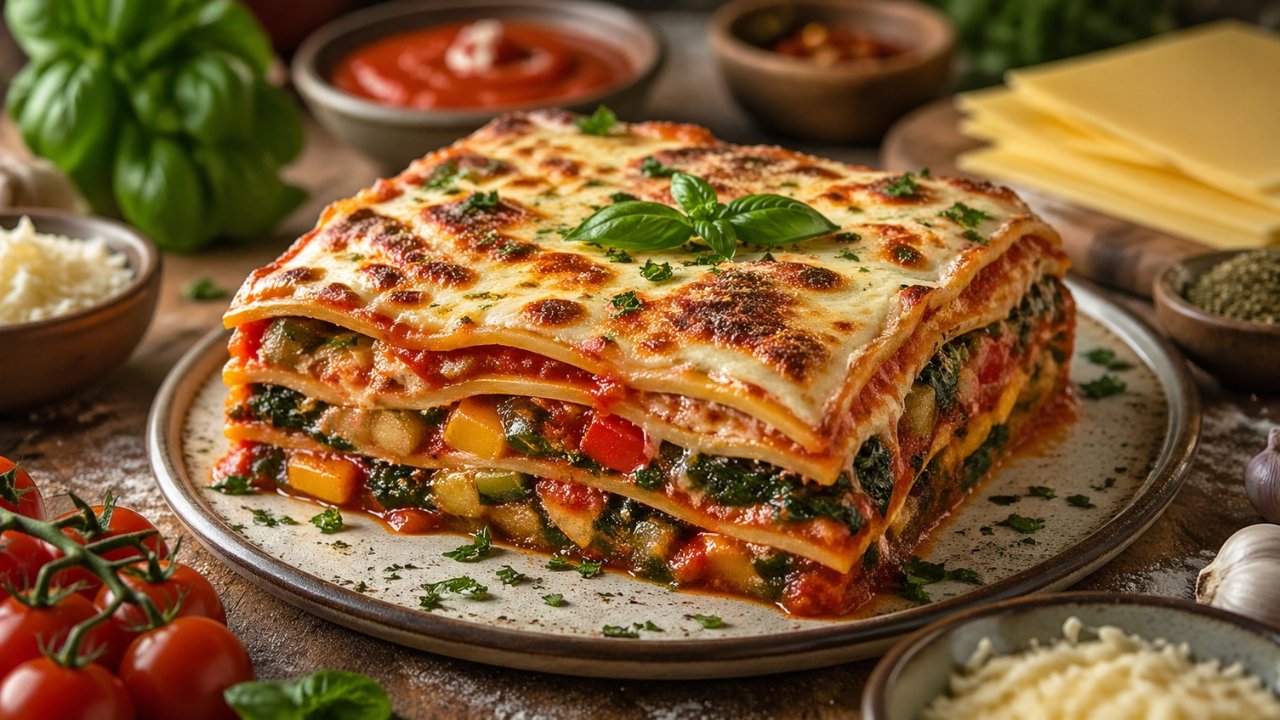
There is a particular kind of silence that settles over the kitchen when a lasagna comes out of the oven. The edges are bubbling, the cheese has bronzed in delicate patches, and the sauce rises in slow, fragrant whispers of tomato, basil, garlic, and roasted vegetables. This veg lasagna is built for that moment: generous, layered, and deeply satisfying, but with enough restraint and structure to slice cleanly rather than surrender into a molten heap.
The secret is not only in the filling, though the filling matters. It is in the balance of moisture, the way the vegetables are cooked before layering, the thickness of the sauce, the quiet discipline of spreading each layer evenly, and finally, the twelve-minute rest. That short pause allows the pasta, cheese, and sauce to settle into one another. It transforms the dish from bubbling abundance into elegant, sliceable comfort.

This is a vegetable lasagna with real depth: sweet roasted peppers, courgette, mushrooms, spinach, a well-seasoned tomato sauce, and a soft, creamy ricotta layer that keeps everything luxurious without becoming heavy. It is a beautiful dish for Sunday lunch, a relaxed dinner party, or any evening when the table deserves something warm, fragrant, and a little ceremonious.

Recipe Information
- Recipe Name: Veg Lasagna
- Description: A layered vegetarian lasagna with roasted vegetables, tomato basil sauce, ricotta, spinach, mozzarella, and Parmesan, rested briefly before slicing for clean, structured portions.
- Servings: 6 generous portions
- Preparation Time: 35 minutes
- Cooking Time: 55 minutes
- Resting Time: 12 minutes
- Total Time: 1 hour 30 minutes
- Difficulty: Medium
- Recipe Category: Main Course
- Cuisine: Italian-inspired
Ingredients
For the vegetable filling
- 2 tablespoons olive oil
- 1 medium red onion, finely chopped
- 3 garlic cloves, minced
- 1 medium courgette, diced
- 1 red bell pepper, diced
- 250 g mushrooms, sliced
- 150 g fresh spinach
- 1 teaspoon dried oregano
- 1 teaspoon sea salt, plus more to taste
- Freshly ground black pepper, to taste
For the tomato sauce
- 2 tablespoons olive oil
- 2 garlic cloves, finely sliced
- 700 ml passata or crushed tomatoes
- 2 tablespoons tomato paste
- 1 teaspoon sugar, optional, to balance acidity
- 1 teaspoon dried basil
- Small handful fresh basil leaves, torn
- Salt and black pepper, to taste
For the cheese layer
- 300 g ricotta
- 120 g grated Parmesan, divided
- 1 egg
- Pinch of nutmeg
- Black pepper, to taste
For assembling
- 9 to 12 lasagna sheets, depending on dish size
- 250 g mozzarella, grated or torn
- Extra basil leaves, for finishing
- 1 teaspoon olive oil, for greasing the dish
Kitchen Tools
- Large frying pan or sauté pan
- Medium saucepan
- Mixing bowl
- Wooden spoon
- Rectangular baking dish, about 23 x 33 cm
- Foil
- Sharp knife
- Wide spatula for serving
Preparation
Preparing the vegetables
- Start with moisture control: Heat the olive oil in a large frying pan over medium heat. Add the onion and cook for 5 minutes, until softened and lightly translucent. Stir in the garlic and cook for another minute, just until fragrant.
- Add the courgette, red pepper, and mushrooms. Cook for 10 to 12 minutes, stirring occasionally, until the vegetables have released their moisture and the pan begins to look glossy rather than watery. This step is essential for a stable veg lasagna; excess liquid is one of the main reasons lasagna collapses when sliced.
- Add the spinach in handfuls, allowing it to wilt into the vegetables. Season with oregano, salt, and black pepper. Cook for another 2 minutes, then remove from the heat. Taste and adjust the seasoning. The filling should be savory, aromatic, and concentrated, not bland or wet.
Making the tomato sauce
- Warm the olive oil in a saucepan over medium-low heat. Add the sliced garlic and let it gently perfume the oil for about 1 minute without browning.
- Stir in the passata, tomato paste, dried basil, sugar if using, salt, and pepper. Simmer uncovered for 15 minutes, stirring occasionally, until the sauce thickens slightly and tastes rounded rather than sharp.
- Texture check: The sauce should coat the back of a spoon. If it feels thin, simmer it for a few more minutes. A slightly thicker sauce gives the lasagna structure and keeps the pasta layers beautifully defined.
- Remove the sauce from the heat and stir in the fresh basil. Let it stand while you prepare the cheese mixture.
Preparing the ricotta layer
- In a mixing bowl, combine the ricotta, half of the Parmesan, the egg, nutmeg, and a little black pepper. Stir until smooth and creamy.
- Note: The egg helps the ricotta set gently during baking, giving the lasagna a clean, custard-like layer rather than a loose filling. It should not taste eggy; it simply brings refinement and structure.
Assembling and baking the lasagna
- Preheat the oven to 190°C. Lightly grease the baking dish with olive oil. Spoon a thin layer of tomato sauce over the base; this prevents the pasta from sticking and begins the layering with moisture in the right place.
- Place a layer of lasagna sheets over the sauce, trimming if needed. Spread over a portion of ricotta mixture, followed by vegetables, tomato sauce, mozzarella, and a little Parmesan. Repeat the layers, keeping them even and not overfilling any single section.
- Finish with pasta sheets, tomato sauce, mozzarella, and the remaining Parmesan. The top should look well covered but not overloaded; the cheese will melt, spread, and form a golden crust.
- Cover the dish loosely with foil and bake for 35 minutes. Remove the foil and bake for another 20 minutes, until the top is golden, the edges are bubbling, and a knife slips easily through the pasta.
- Important: Let the lasagna rest for exactly 12 minutes before cutting. This is not hesitation; it is technique. The layers relax, the cheese settles, and the sauce thickens just enough to hold a graceful slice.
Serving Suggestions
Serve this veg lasagna warm, not scalding hot, when the cheese is still tender and the sauce has settled into the pasta. Use a sharp knife to cut neat squares, then lift each portion with a wide spatula so the layers remain intact. A few fresh basil leaves over the top add fragrance and a gentle lift of color.
For a refined plate, pair it with a crisp green salad dressed simply with lemon juice, olive oil, sea salt, and a little Dijon mustard. Garlic bread is welcome, but choose something lightly toasted rather than heavy; the lasagna itself already carries richness. A bowl of marinated olives or roasted cherry tomatoes also makes a beautiful accompaniment.
Chef Tips
Cook the vegetables before layering
Raw vegetables may seem convenient, but they release water as they bake. Cooking them first concentrates their flavor and prevents the lasagna from becoming loose. Mushrooms, in particular, need time in the pan to deepen and shed moisture.
Keep the sauce thick but fluid
A sauce that is too thin makes the lasagna slide; a sauce that is too dry leaves the pasta undercooked. Aim for a spoon-coating consistency. It should move slowly, with body and gloss.

Respect the resting time
The title of this dish says everything: those 12 minutes matter. Cut too soon and even the most carefully built lasagna will slump. Wait briefly, and the same dish becomes composed, generous, and beautifully sliceable.
Storage and Make-Ahead Tips
Leftover lasagna keeps well in an airtight container in the refrigerator for up to 3 days. Reheat individual portions in a moderate oven until warmed through, or use a microwave for convenience, covering the portion lightly so it does not dry out.
To make it ahead, assemble the lasagna up to 24 hours in advance, cover it tightly, and refrigerate. Add 5 to 10 extra minutes to the covered baking time if baking straight from the refrigerator. The baked lasagna can also be frozen in portions; wrap well and freeze for up to 2 months. Thaw overnight in the refrigerator before reheating.
Additional Information
Lasagna is one of Italy’s great layered dishes, traditionally associated with abundance, patience, and the pleasure of feeding a table. While classic versions often include meat ragù, vegetable lasagna has its own quiet elegance. It allows the cook to work with texture and seasonality: mushrooms for depth, peppers for sweetness, courgette for softness, spinach for earthiness, and basil for freshness.
This version is Italian-inspired rather than strictly traditional, designed for the modern home kitchen where flavor, structure, and comfort must all meet in one dish. Its most important lesson is simple but often overlooked: good lasagna is not only about what goes into it, but how it is allowed to settle. A short rest turns bubbling layers into something composed and deeply satisfying. That is the difference between a delicious landslide and a beautiful, confident slice.
