
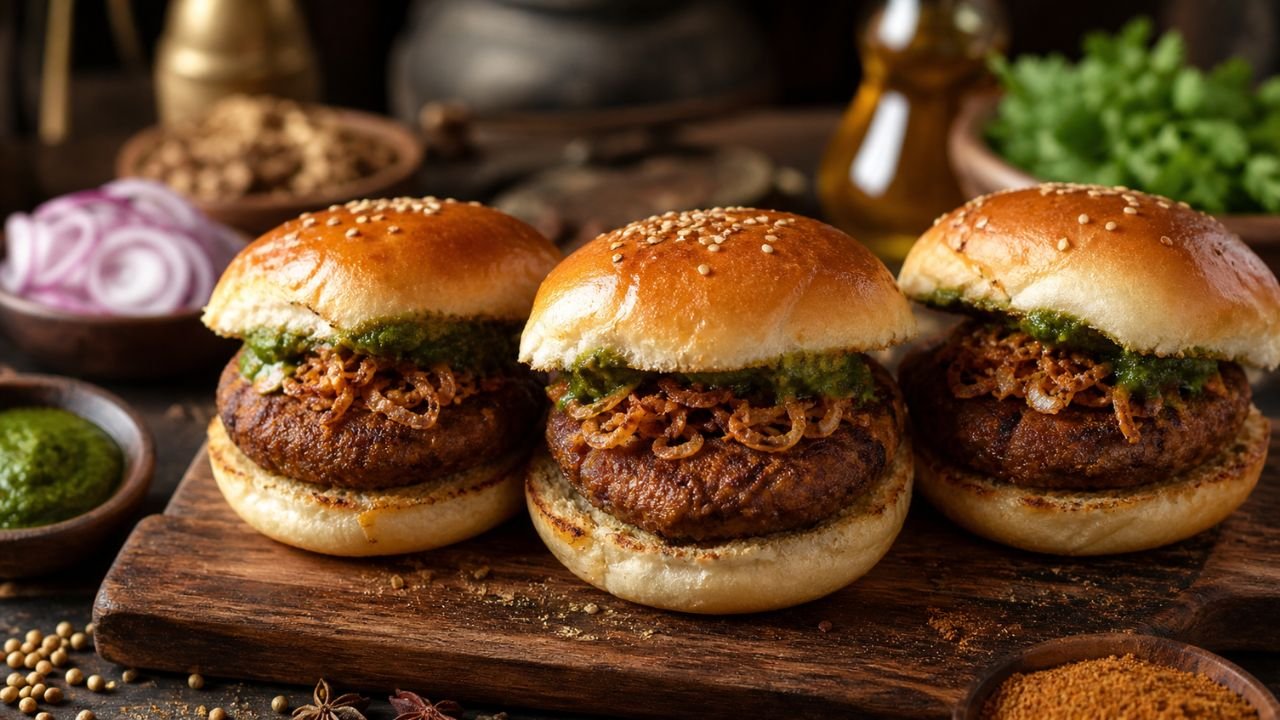
There are dishes that satisfy hunger, and then there are dishes that tell stories—stories of royalty, refinement, and culinary obsession. Lucknowi Galouti kebabs belong unmistakably to the latter. Born in the regal kitchens of Awadh, these kebabs were crafted with an almost poetic precision, designed to be so soft that they required no chewing. Each bite was meant to dissolve effortlessly, releasing a symphony of spices that lingered like a memory.
In this modern reinterpretation, we take that heritage and cradle it within soft, golden slider buns—creating an experience that is both nostalgic and contemporary. But the real secret lies not in an exotic ingredient, nor in an elaborate technique. It lies in one subtle change: a refined mixing method that transforms the texture entirely. This thoughtful shift ensures that the kebabs are impossibly tender, almost fragile, as if they might surrender to gravity before even reaching your lips.
These sliders are not just food—they are an experience of texture, aroma, and indulgence. Perfect for intimate gatherings or elevated snacking, they promise to captivate anyone who takes a bite.
 Gâteau aux pommes moelleux : ma recette ultra rapide prête en un rien de temps, et vraiment facile
Recipe Information
Recipe Name: Lucknowi Galouti Kebab Sliders
Description: Delicately spiced, ultra-soft minced meat kebabs inspired by Awadhi culinary traditions, gently cooked and served in buttery slider buns for an indulgent and refined bite-sized delight.
Servings: 10 sliders
Preparation Time: 30 minutes
Cooking Time: 25 minutes
Total Time: 55 minutes
Inactive Time: 2–3 hours (marination)
Difficulty: Intermediate
Category: Appetizer / Gourmet Snack
Cuisine: Awadhi (Lucknowi)
Ingredients
For the Galouti Kebabs
- 600 g finely minced mutton or lamb (preferably double minced for smoothness)
- 2 tablespoons raw papaya paste (natural tenderizer)
- 3 tablespoons browned onion paste (deep, caramelized flavor)
- 1 tablespoon ginger-garlic paste
- 1 teaspoon red chili powder
- 1 teaspoon garam masala powder
- 1/2 teaspoon roasted cumin powder
- 1/2 teaspoon black pepper powder
- 1/2 teaspoon green cardamom powder
- 1/4 teaspoon clove powder
- 1/4 teaspoon nutmeg powder
- 1 tablespoon fresh cream
- 1 tablespoon ghee
- Salt to taste
- 2 tablespoons finely chopped fresh coriander
- 1 tablespoon finely chopped mint leaves
For the Sliders
- 10 mini slider buns
- Butter for toasting
- Mint chutney
- Thinly sliced onions
- Lemon wedges
Kitchen Tools
- Large mixing bowl
- Flat skillet or heavy-bottomed tawa
- Flexible spatula
- Food processor (optional, for smoother texture)
- Small ring mold (optional for uniform shaping)
- Basting brush
- Plate lined with parchment paper
Preparation
Step 1: Preparing the Base with Precision
Begin by placing the finely minced meat in a wide mixing bowl. The quality of the mince is crucial—aim for a paste-like consistency rather than coarse strands. If needed, pulse it briefly in a food processor to achieve a silky texture. This foundational step determines how luxuriously the kebabs will melt later.
Step 2: The Transformative Mixing Technique
Add the raw papaya paste to the meat, but resist the urge to mix vigorously. Instead, use your fingertips to gently fold and press the papaya into the mince. Think of it as coaxing the ingredients together rather than forcing them. Allow this mixture to rest for 5–7 minutes. This small pause allows the enzymes in the papaya to begin tenderizing without overworking the protein.
This is the pivotal moment—the changed mixing step. By delaying the addition of other ingredients and avoiding aggressive mixing, the structure of the meat remains delicate, ensuring an almost mousse-like softness in the final kebab.
Step 3: Building Layers of Flavor
Now incorporate the browned onion paste, ginger-garlic paste, spices, salt, fresh cream, and herbs. Continue with the same gentle folding motion. Avoid kneading or pressing too hard. The goal is a cohesive mixture that feels light and airy, not dense or compact.
Step 4: Marination
Cover the bowl and refrigerate the mixture for at least 2 to 3 hours. This resting period is essential—not just for flavor infusion, but for texture development. The spices meld, the papaya tenderizes further, and the mixture firms up just enough to be shaped.
Step 5: Shaping with Care
Lightly grease your palms with ghee. Take small portions of the mixture and shape them into thin, delicate patties. They should be soft to the touch and slightly fragile. If the mixture feels too loose, chill it a bit longer instead of adding any binding agents.
Step 6: Cooking to Perfection
Heat a flat skillet over low to medium heat and add a thin layer of ghee. Place the kebabs gently onto the surface. Let them cook undisturbed for 4–5 minutes before carefully flipping. Use a wide spatula and a steady hand, as they are extremely tender. Cook the other side for another 4–5 minutes until lightly browned and aromatic.
The kebabs should develop a delicate crust while remaining incredibly soft inside—almost creamy in texture.
Step 7: Toasting the Buns
Slice the slider buns in half and lightly butter them. Toast on a skillet until golden and slightly crisp. This adds a textural contrast that enhances the overall experience.
Step 8: Assembling the Sliders
Spread a thin layer of mint chutney on the base bun. Place a kebab gently on top, followed by a few slices of onion and a squeeze of lemon. Cover with the top bun and serve immediately.
Serving Suggestions
These sliders are best enjoyed fresh, when the kebabs are still warm and aromatic. Arrange them on a platter lined with parchment and garnish with fresh herbs for an elegant presentation. A side of mint chutney or a lightly spiced yogurt dip complements the richness beautifully.
For a more elaborate spread, serve alongside pickled onions, green chilies, and a refreshing drink like chilled jaljeera or rose sherbet. The balance of heat, tang, and sweetness elevates the dining experience.
If you are hosting a gathering, consider serving these sliders as part of a tasting menu. Their small size and luxurious flavor make them perfect for curated, multi-course meals.
Chef Tips
- Respect the texture: The hallmark of Galouti kebabs is their softness. Avoid overmixing at all costs.
- Use fresh papaya paste: It is the key to achieving authentic tenderness.
- Keep the heat controlled: Cooking on low to medium heat ensures even cooking without drying the kebabs.
- Do not rush marination: The resting time is essential for both flavor and texture.
- Handle gently: From shaping to flipping, treat the kebabs with care to maintain their structure.
- Balance moisture: If the mixture feels too wet, chilling is the solution—not adding fillers.
Storage and Make-Ahead Tips
The kebab mixture can be prepared a day in advance and stored in an airtight container in the refrigerator. In fact, allowing it to rest overnight enhances the depth of flavor significantly.
Cooked kebabs can be refrigerated for up to 2 days. Reheat them gently on a skillet with a touch of ghee to restore their softness. Avoid microwaving, as it can make them rubbery.
For longer storage, shape the kebabs and freeze them uncooked. Place parchment paper between layers to prevent sticking and store in a sealed container for up to one month. Thaw overnight in the refrigerator before cooking.
The slider buns can also be toasted in advance and reheated lightly before serving, ensuring a quick assembly process when needed.
Additional Information
The story of Galouti kebabs is deeply rooted in the culinary traditions of Lucknow. It is said that they were created for a nawab who had lost his teeth but not his love for rich food. Chefs were challenged to create a kebab so soft that it required no chewing, leading to the invention of this iconic dish.
The use of raw papaya as a tenderizer is a technique that has stood the test of time. Its natural enzymes break down the meat fibers, resulting in a texture that is unmatched in its delicacy. Combined with a complex blend of spices, the kebab becomes a masterpiece of balance and depth.
This slider version pays homage to that legacy while embracing modern dining sensibilities. It transforms a royal delicacy into an accessible yet luxurious experience, perfect for contemporary tables.
The subtle change in mixing technique may appear insignificant, but it is this attention to detail that defines great cooking. By treating the ingredients with respect and understanding their behavior, you unlock a level of refinement that elevates the dish from good to unforgettable.
In the end, these Lucknowi Galouti Kebab Sliders are more than just a recipe—they are a celebration of tradition, technique, and taste. Each bite tells a story of heritage, innovation, and indulgence, inviting you to savor not just the flavors, but the artistry behind them.
