
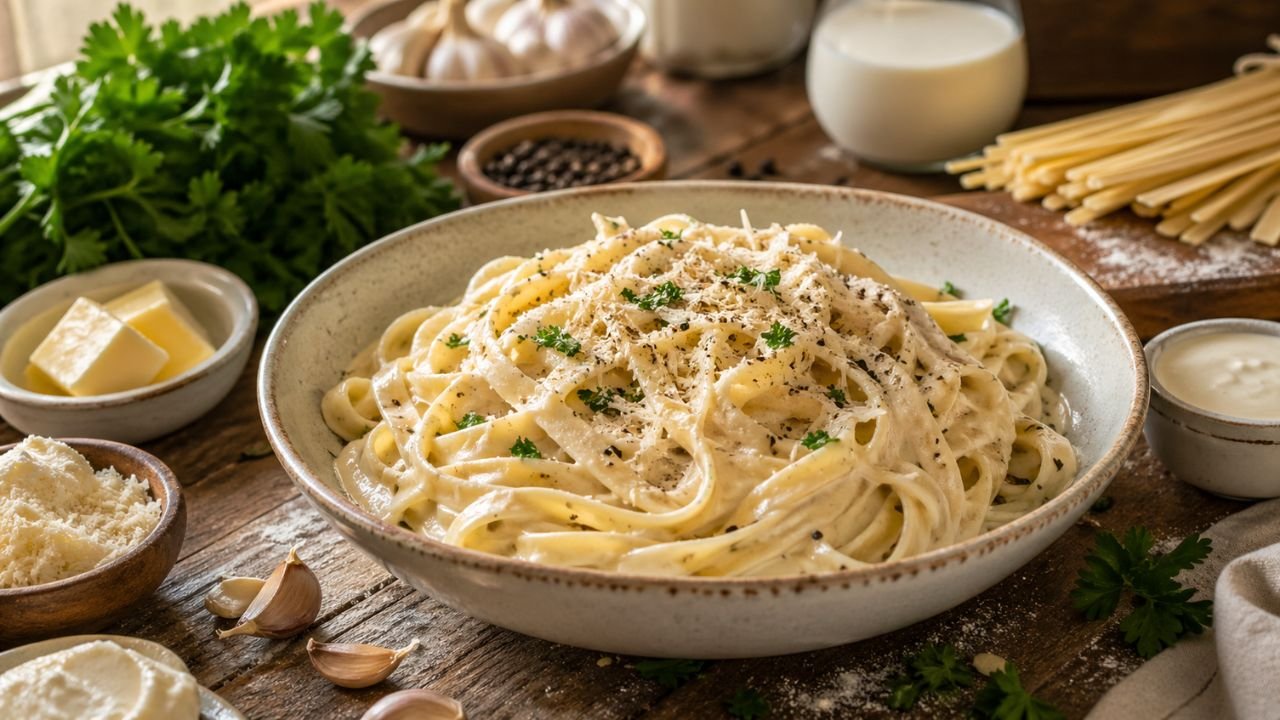
There is a particular kind of pleasure in a bowl of Alfredo pasta when it is made properly: the sauce clings in a pale, glossy ribbon, the cheese melts into the cream rather than falling into grainy little flecks, and every forkful feels generous without becoming heavy. This version of Creamy Alfredo Pasta is designed for exactly that moment, with a sauce that stays smooth and spoonable long after it leaves the pan.
The secret is not more cream, nor an excessive hand with butter. I stir in a small spoonful of cream cheese, an ingredient that behaves almost like culinary insurance. It stabilizes the sauce, lends a gentle tang, and keeps the Alfredo silky for a full 20 minutes, which is particularly useful when serving at the table, plating several portions, or allowing the pasta to wait while everyone gathers.
This is still Alfredo in spirit: elegant, rich, simple, and deeply comforting. The dish asks for good Parmesan, warm patience, and a little attention to heat. In return, it gives you a restaurant-style pasta with a satin finish, balanced seasoning, and that lovely slow-coating quality that makes Alfredo feel indulgent rather than merely creamy.
Recipe Information
- Recipe Name: Creamy Alfredo Pasta
- Description: A refined, silky Alfredo pasta made with butter, cream, Parmesan, and one extra spoonful of cream cheese to keep the sauce glossy and smooth for 20 full minutes.
- Servings: 4 servings
- Preparation Time: 10 minutes
- Cooking Time: 18 minutes
- Total Time: 28 minutes
- Difficulty: Easy to medium
- Recipe Category: Main course
- Cuisine: Italian-inspired
Ingredients
For the pasta
- 340 g fettuccine, tagliatelle, or other long pasta
- 2 teaspoons fine sea salt, for the pasta water
- 1 cup reserved pasta cooking water, saved before draining
For the Alfredo sauce
- 3 tablespoons unsalted butter
- 2 cloves garlic, finely grated or minced
- 1 cup heavy cream
- 2 tablespoons full-fat cream cheese, softened
- 90 g freshly grated Parmesan cheese, plus extra for serving
- 1/4 teaspoon freshly grated nutmeg
- 1/2 teaspoon freshly ground black pepper
- Fine sea salt, to taste
For finishing
- 1 tablespoon finely chopped parsley, optional
- Extra black pepper, for serving
- A small knob of butter, optional, for extra gloss
Kitchen Tools
- Large pot for boiling pasta
- Wide sauté pan or deep skillet
- Tongs
- Fine grater or microplane
- Measuring cups and spoons
- Ladle or heatproof cup for pasta water
- Colander
Preparation
Boiling the pasta properly
- Season the water well: Bring a large pot of water to a rolling boil, then add the salt. Alfredo sauce is rich and mellow, so the pasta itself needs to carry seasoning from within. Add the fettuccine and stir immediately so the strands do not settle and stick together.
- Cook the pasta until just al dente, usually 1 minute less than the package suggests. The pasta will finish in the sauce, where it absorbs flavour and releases starch. Before draining, reserve at least 1 cup of the cooking water. This cloudy water is one of the most important ingredients in a polished Alfredo because it helps the sauce loosen, emulsify, and coat the noodles gracefully.
Building the silky Alfredo base
- While the pasta cooks, place a wide sauté pan over medium-low heat and add the butter. Let it melt gently without browning. Add the garlic and cook for 30 to 45 seconds, just until fragrant. The garlic should soften into the butter, not fry sharply or turn bitter.
- Pour in the heavy cream and bring it to a quiet simmer. Keep the heat controlled; vigorous boiling can make dairy sauces separate. Whisk in the cream cheese until fully melted. This is the extra ingredient that gives Creamy Alfredo Pasta its lasting silkiness. It blends into the cream almost invisibly, giving the sauce body and stability without making it taste like a different dish.
- Add the nutmeg and black pepper, then allow the sauce to simmer gently for 2 to 3 minutes. It should thicken slightly but remain fluid. If it looks too reduced at this stage, add a splash of reserved pasta water rather than more cream. The goal is a sauce that can move, not a heavy paste.
Adding the cheese with control
- Reduce the heat to low before adding the Parmesan. This is a small but essential chef’s habit. Cheese prefers gentle heat; too much heat can make it tighten and turn grainy. Add the Parmesan gradually, a handful at a time, stirring until each addition melts before adding more.
- Texture check: The sauce should look smooth, glossy, and lightly thickened. If it appears too dense, add 2 to 3 tablespoons of pasta water and stir until it relaxes. If it seems too thin, let it sit over low heat for a minute while stirring, remembering that the pasta will help thicken it further.
Tossing and finishing the pasta
- Add the drained pasta directly into the pan of sauce. Use tongs to lift and turn the noodles repeatedly, coating them from end to end. This tossing motion is what turns cream, butter, cheese, and starch into a unified sauce. Add reserved pasta water a little at a time until the Alfredo becomes glossy and fluid enough to cloak the pasta beautifully.
- Tip: Stop when the sauce looks slightly looser than you want on the plate. Alfredo thickens as it stands, and this version is designed to remain silky for 20 minutes, but it still benefits from being finished with a little movement and moisture.
- Taste carefully and adjust with salt and black pepper. Parmesan varies in salinity, so seasoning at the end is the safest way to preserve balance. For extra sheen, toss in a small knob of butter just before serving. Finish with parsley if you want a quiet lift of color and freshness.
Serving Suggestions
Serve Alfredo pasta immediately in warm shallow bowls, lifting the noodles with tongs so they fall in soft, generous folds. A final dusting of Parmesan and a few turns of black pepper are enough; this is not a dish that needs ornament. Its beauty lies in its pale, creamy gloss and the way the sauce catches the ridges and curves of the pasta.
This Creamy Alfredo Pasta is ideal for a calm dinner, a polished weekend lunch, or a simple main course before a crisp green salad. It pairs especially well with roasted asparagus, sautéed mushrooms, grilled chicken, or delicate prawns. For balance, serve it with something bright on the side: lemon-dressed greens, bitter leaves, or a salad with shaved fennel and herbs.
Chef Tips
Use freshly grated Parmesan
Pre-grated cheese often contains anti-caking agents that can prevent a sauce from melting smoothly. For Alfredo, freshly grated Parmesan is not a luxury; it is a technical choice. It melts faster, tastes cleaner, and gives the sauce a more refined texture.
Keep the heat gentle
High heat is the most common reason Alfredo breaks. Once the cream is warm and the cheese enters the pan, the sauce should be coaxed rather than boiled. Gentle heat preserves the emulsion and keeps the dairy supple.
Let pasta water do the quiet work
Reserved pasta water is not just water. It contains starch, salt, and heat, all of which help the sauce cling to the noodles. Add it gradually and trust how dramatically it can transform a thick sauce into something glossy and restaurant-worthy.
Why cream cheese works
The small amount of cream cheese brings structure without dominating the flavor. It helps prevent the sauce from tightening too quickly, which is why the pasta remains velvety even after sitting for several minutes. The result is still recognizably Alfredo, only more forgiving and more stable.
Storage and Make-Ahead Tips
Alfredo pasta is at its finest just after cooking, but leftovers can still be handled well. Store cooled pasta in an airtight container in the refrigerator for up to 2 days. Reheat gently in a skillet over low heat with a splash of milk, cream, or water, tossing until the sauce loosens and becomes creamy again. Avoid microwaving on high heat, as this can cause the sauce to separate.
For make-ahead preparation, grate the Parmesan, mince the garlic, and measure the cream and butter in advance. The sauce itself is best made fresh, because Alfredo depends on a live emulsion. However, having every ingredient ready allows the cooking process to feel smooth and controlled, which is exactly what this dish rewards.
Additional Information
Alfredo-style pasta has its roots in the Roman tradition of combining pasta, butter, and cheese into something far greater than the sum of its parts. The richer cream-based version became especially beloved in Italian-American cooking, where it evolved into the luxurious sauce many people recognize today. This recipe honors that creamy interpretation while refining the technique so the sauce stays elegant rather than heavy.
The added cream cheese is not meant to rewrite tradition, but to solve a very modern serving problem: creamy sauces often tighten quickly once they leave the stove. In a professional kitchen, timing and heat can be controlled with precision. At home, dinner may pause for a phone call, a late guest, or a salad that still needs dressing. This method gives the cook a little grace. The sauce stays glossy, the pasta remains inviting, and the dish arrives at the table with the calm confidence a good Alfredo deserves.
