
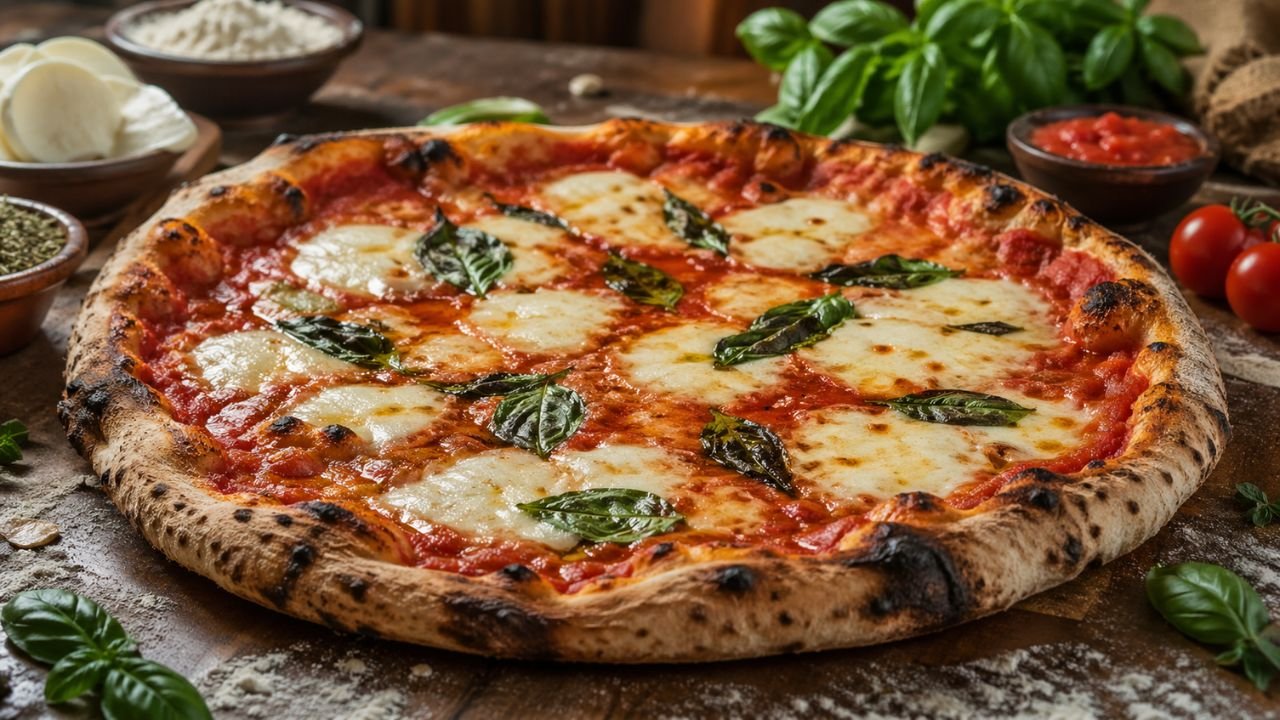
There is a particular kind of pizza that feels at home beside a cold pint: crisp at the edges, tender through the center, fragrant with basil, and blistered just enough to suggest a proper oven. This Margherita Brewpub Pizza is built around that spirit: generous, aromatic, unfussy, but made with the sort of care that turns simple ingredients into something memorable.
The secret is not a complicated dough or an extravagant topping. It is one baking adjustment: preheating the sheet pan upside down until it is fiercely hot, then sliding the dressed pizza directly onto that heated surface. The result is a crust that blisters in 12 minutes, with a lightly smoky edge, a supple chew, and a base sturdy enough to hold crushed tomato, mozzarella, and bright basil.
This is a pizza for relaxed evenings, casual gatherings, or the moment when you want something that tastes restaurant-made without leaving your kitchen. The flavors are classic Margherita, but the texture leans brewpub-style: bold, crisp, and deeply satisfying.
Recipe Information
- Recipe Name: Margherita Brewpub Pizza
- Description: A crisp, blistered brewpub-style Margherita pizza baked on a preheated inverted sheet pan for a golden, airy crust in just 12 minutes.
- Servings: 2 to 3 servings
- Preparation Time: 25 minutes
- Cooking Time: 12 minutes
- Rising Time: 1 hour 30 minutes
- Total Time: 37 minutes
- Difficulty: Intermediate
- Recipe Category: Pizza, Main Course
- Cuisine: Italian-American
Ingredients
For the dough
- 2 cups bread flour, plus more for dusting
- 3/4 teaspoon fine sea salt
- 1 teaspoon instant yeast
- 3/4 cup warm water
- 1 tablespoon olive oil
- 1 teaspoon honey or sugar
For the tomato layer
- 1/2 cup crushed canned tomatoes
- 1 small garlic clove, finely grated
- 1 teaspoon olive oil
- 1/4 teaspoon sea salt
- Pinch of dried oregano
For the topping
- 5 ounces fresh mozzarella, torn and patted dry
- 2 tablespoons finely grated Parmesan
- Fresh basil leaves
- 1 tablespoon olive oil, for finishing
- Flaky sea salt, to taste
- Freshly ground black pepper, to taste
Kitchen Tools
- Large mixing bowl
- Wooden spoon or dough whisk
- Rimmed sheet pan
- Parchment paper
- Rolling pin or fingertips for stretching
- Small bowl for sauce
- Pizza peel or flat cutting board
- Sharp knife or pizza wheel
Preparation
Making the dough
- Begin with structure: In a large bowl, combine the bread flour, salt, and instant yeast. Stir the warm water with the olive oil and honey, then pour it into the flour mixture. Mix until a shaggy dough forms, making sure no dry pockets remain at the bottom of the bowl.
- Turn the dough onto a lightly floured surface and knead for 6 to 8 minutes, until smooth, elastic, and slightly tacky. It should feel alive under your hands, soft but not sticky. If it clings aggressively, dust with a small amount of flour, but avoid adding too much.
- Place the dough in a lightly oiled bowl, cover, and let it rise for 1 hour 30 minutes, or until nearly doubled. This rising time develops flavor and gives the crust the airy strength needed for the signature blistered finish.
Preparing the sauce and toppings
- Stir together the crushed tomatoes, grated garlic, olive oil, salt, and oregano. Keep the sauce uncooked; its brightness is part of what makes a Margherita pizza feel fresh and clean.
- Tip: Pat the mozzarella thoroughly with paper towels before using. Excess moisture is the enemy of a crisp crust, especially in a home oven.
- Tear the mozzarella into small pieces rather than slicing it thickly. This allows the cheese to melt in scattered pools, leaving room for the tomato to bubble and the crust to breathe.
Shaping the pizza
- Place an inverted rimmed sheet pan on the middle rack of the oven and preheat to 500°F for at least 30 minutes. This is the changed baking step that gives the Margherita Brewpub Pizza its blistered, pub-style crust.
- Set the risen dough on a lightly floured sheet of parchment. Press it gently from the center outward, stretching it into a 12-inch round or rustic oval. Leave the outer edge slightly thicker, as this rim will puff and blister beautifully in the heat.
- Texture check: The dough should feel relaxed and elastic. If it springs back too quickly, let it rest for 5 minutes before continuing. A calm dough shapes better and bakes with a more open crumb.
Baking and finishing
- Spread a thin layer of sauce over the dough, stopping just before the edge. Add the torn mozzarella, then sprinkle with Parmesan. Keep the topping restrained; this style depends on balance, not weight.
- Use a flat board or pizza peel to slide the parchment and pizza onto the preheated inverted sheet pan. Bake for 12 minutes, until the crust is deeply golden, blistered at the rim, and crisp underneath.
- Important: Do not open the oven repeatedly. The intense heat is what creates the blistering, and every open door softens that effect.
- Remove the pizza from the oven and immediately finish with fresh basil, olive oil, flaky salt, and black pepper. Let it stand for 2 minutes before slicing so the cheese settles without losing its molten softness.
Serving Suggestions
Serve this Margherita Brewpub Pizza hot, sliced into broad wedges, with the basil still glossy from the finishing oil. It belongs on a wooden board or warm plate, where the blistered edges stay crisp and the cheese remains soft and fragrant.
For a brewpub-style table, pair it with a bitter green salad dressed with lemon, a small bowl of marinated olives, or roasted peppers with a splash of vinegar. The pizza is especially good with a pale ale, pilsner, or sparkling water with citrus, anything that refreshes the palate between bites of cheese, tomato, and charred crust.
Chef Tips
Use less sauce than you think
A Margherita pizza should taste vivid, not wet. A thin tomato layer concentrates as it bakes, giving the crust enough room to crisp while still delivering that familiar sweet acidity.
Heat is the real ingredient
The inverted sheet pan acts like a simple baking steel. Because it is already hot when the dough lands on it, the base begins cooking immediately, helping create the blistered underside and lightly puffed rim.
Finish after baking
Add basil only after the pizza leaves the oven. High heat can darken and mute fresh basil, while residual heat releases its perfume without sacrificing its color.
Storage and Make-Ahead Tips
The dough can be made ahead and refrigerated after its first rise for up to 24 hours. Bring it back to room temperature for about 45 minutes before shaping, so it stretches easily and bakes evenly.
Leftover pizza keeps well in the refrigerator for up to 2 days. Reheat slices in a dry skillet over medium heat until the base crisps, then cover briefly to warm the cheese. Avoid microwaving if possible, as it softens the crust and dulls the blistered texture.
The sauce may be prepared up to 3 days in advance and stored covered in the refrigerator. Stir before using, and taste for salt, as cold tomato often needs a small adjustment before baking.
Additional Information
Margherita pizza is rooted in Naples, where tomato, mozzarella, and basil became an elegant expression of restraint. This version respects that simplicity while borrowing the slightly sturdier, crisp-edged character of American brewpub pizza. It is not overloaded or heavily sauced; instead, it uses heat and timing to create drama.
The single altered baking step, heating the pan upside down before the pizza goes in, is small but transformative. It encourages oven spring, browning, and blistering in a way that feels remarkably close to a professional setup. For home cooks, it is a practical technique worth keeping, not only for this pizza but for flatbreads, focaccia-style rounds, and any dough that benefits from a fast, confident bake.
At its best, Margherita Brewpub Pizza is a study in contrast: crisp and tender, simple and expressive, rustic and refined. It proves that one thoughtful adjustment can turn a familiar homemade pizza into something with real character.
